
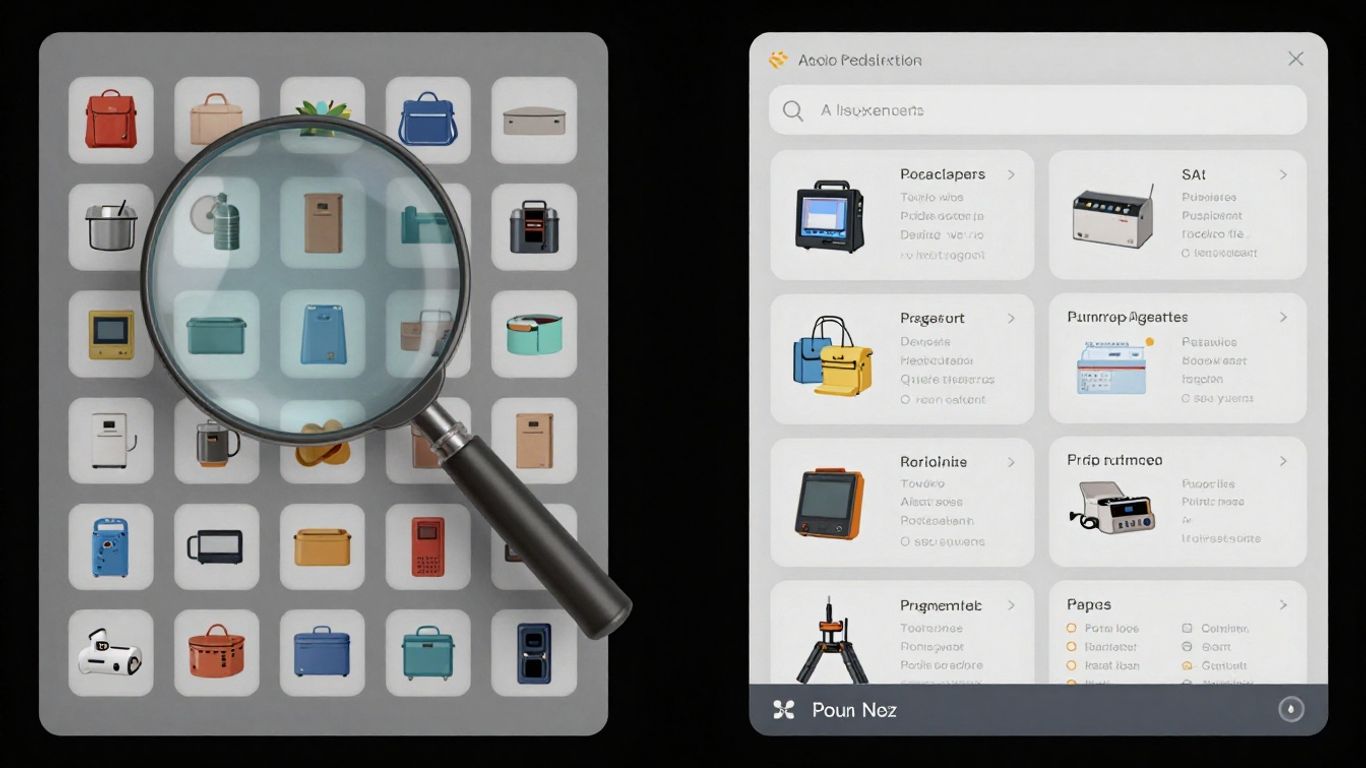
What Is the Difference Between Product Search API and Product Data API?
You're likely looking to understand how to get product information into your systems. Maybe you've heard of a product search API and a product data API, and you're wondering what the difference is. It's a common question, and the answer really comes down to what you need the data for. Let's break down what each one does and how you can use them.
Key Takeaways
- A product data API gives you access to a wide range of product details, not just for searching but for analysis and enrichment.
- A product search API is primarily for finding specific products based on user input, like keywords or filters.
- Product data APIs offer broader capabilities, including filtering by attributes, price, and availability, for deeper insights.
- You can use product data for things like understanding competitor pricing, improving your own product listings, and training machine learning models.
- When choosing how to access product data, consider if you need interactive exploration via a web portal or direct integration through an API.
Understanding Product Data API Functionality
When you're looking to get detailed information about products, a Product Data API is your go-to tool. Think of it as a direct line to a massive database filled with specifics about items you might be selling, analyzing, or just curious about. It's not just about finding a product; it's about getting all the associated details in a structured way that your systems can actually use. This kind of API is built to give you access to a wide range of attributes, from basic identifiers to complex specifications, and it's designed for integration into your own applications or workflows.
Core Capabilities of a Product Data API
A Product Data API is designed to provide a deep look into product information. Its main job is to let you retrieve comprehensive details about individual products or groups of products. This includes things like:
- Product Identifiers: Unique SKUs, UPCs, EANs, and manufacturer part numbers.
- Descriptive Attributes: Product names, brands, descriptions, categories, and specifications (like dimensions, weight, color, material).
- Pricing and Availability: Current pricing, historical price trends, and stock status from various retailers.
- Categorization and Taxonomy: How products are classified within a structured hierarchy.
- Related Information: Sometimes this can extend to images, reviews, or even warranty details.
This level of detail is what allows businesses to perform tasks like catalog enrichment or competitive pricing analysis. The API acts as a bridge, connecting this rich product information to your internal systems, making it accessible for analysis and action.
Data Retrieval and Filtering Mechanisms
Getting the right data is key, and a Product Data API offers robust ways to pinpoint exactly what you need. You're not just getting a giant dump of information; you can ask for specific things. Common methods include:
- Direct Lookups: Searching for a product using its unique identifier (like a UPC or SKU) to get its specific record.
- Keyword and Attribute Search: Finding products based on names, brands, or specific attributes (e.g., "red running shoes size 10").
- Categorization Filters: Narrowing down results to specific product categories or subcategories.
- Retailer-Specific Queries: If you're interested in how a product is sold by different stores, you can often filter by retailer.
- Price and Availability Filters: You can set parameters to find products within a certain price range or those that are currently in stock.
These filtering capabilities are what make the API so powerful for targeted research and integration. You can access product data that fits your exact needs without sifting through irrelevant information.
Integration with Internal Systems
The real power of a Product Data API comes when you connect it to your own tools. Instead of manually copying and pasting data, you can automate the process. This means:
- Automated Catalog Updates: Keeping your own product catalog in sync with external data sources.
- Real-time Pricing Monitoring: Automatically tracking competitor prices or your own product pricing.
- Data Enrichment: Adding missing product details to your existing database.
- Analytics and Reporting: Feeding product data directly into your business intelligence tools for deeper insights.
By integrating the API, you turn raw product information into actionable intelligence that can drive business decisions and improve operational efficiency.
Distinguishing Product Search API from Product Data API
It's easy to get these two mixed up, but they really do different things. Think of it like this: a Product Search API is like a quick way to find a specific book in a library, while a Product Data API is like having access to the entire library's catalog, including all the details about every book.
Purpose and Scope of Product Search
A Product Search API is built for one main job: finding products. You give it some keywords, maybe a brand name or a category, and it gives you back a list of matching products. It's great for when you just need to quickly locate items, perhaps to display them on a website or in an app. It focuses on the 'finding' part, not necessarily on giving you every single detail about those products. It's about speed and relevance for a specific query.
The Comprehensive Nature of Product Data APIs
Now, a Product Data API is a whole different ballgame. It's not just about finding things; it's about providing a deep dive into the products themselves. You can get detailed attributes, specifications, pricing history, availability across different retailers, and much more. This kind of API is designed to give you a complete picture, allowing you to analyze trends, enrich your own product catalogs, or build sophisticated business intelligence tools. It's about the depth and breadth of information available.
Key Differentiators in Functionality
Let's break down how they differ in practice:
- Focus: Search APIs focus on query results and matching keywords. Data APIs focus on the attributes and details of the products themselves.
- Data Depth: Search APIs provide basic product identifiers and summaries. Data APIs offer rich, structured information like specifications, pricing history, and availability.
- Use Cases: Search APIs are good for e-commerce site search bars or simple product lookups. Data APIs are better for competitive analysis, catalog management, pricing intelligence, and machine learning applications.
Here’s a quick look at what you might expect:
Leveraging Product Data for Business Intelligence
Product data is more than just a list of items; it's a goldmine of information that can significantly inform your business strategies. By analyzing this data, you can gain insights into market dynamics, customer behavior, and competitive landscapes. This section explores how you can use product data to make smarter business decisions.
Pricing Intelligence and Competitive Analysis
Understanding how your products are priced relative to competitors is key to market positioning. Product data allows you to track pricing trends across various retailers and identify price gaps or opportunities. You can monitor competitor pricing in near real-time, helping you adjust your own pricing strategies to remain competitive. This also extends to analyzing competitor assortments – what products do they carry that you don't, and vice versa? This information is vital for strategic assortment planning and identifying unmet market needs.
Catalog Enrichment and Product Management
Maintaining an accurate and detailed product catalog is an ongoing challenge. Product data APIs can help by providing standardized attributes, descriptions, and identifiers. You can use this data to enrich your internal product catalog, ensuring consistency and completeness. This is particularly useful for e-commerce platforms or marketplaces that need to present detailed product information to customers. By having well-structured data, you improve the customer experience and streamline internal product management processes.
Analytics and Machine Learning Applications
For data science and analytics teams, product data serves as a rich source for training models and uncovering deeper trends. You can analyze product attributes, sales history, and customer reviews to build recommendation systems, forecast demand, or classify products more effectively. For instance, understanding which product features correlate with higher sales can inform product development. The structured nature of product data, especially when accessed via an API, makes it suitable for automated ingestion into data warehouses and machine learning pipelines, allowing for advanced analytics and the development of AI solutions.
Here's a look at how different teams can utilize this data:
- Analysts: Monitor pricing, coverage, and category performance.
- Engineers: Integrate product intelligence into applications and dashboards.
- Product Managers: Validate ideas and design features using real-world product information.
- Data Scientists: Train models for recommendations, forecasting, and classification.
Accessing and Utilizing Product Data
Once you understand what product data can do for your business, the next step is figuring out how to actually get your hands on it and put it to work. There are a few main ways to do this, and the best choice for you really depends on your team's needs and technical know-how.
Web Portal vs. API Access
For many, especially those who aren't deeply technical, starting with a web portal is the way to go. It's like a user-friendly dashboard where you can search for products, apply filters for things like price or brand, and then just look at the details. It's a quick way to get a feel for the data and see if it covers what you're looking for. You can often export small samples from here too, which is handy for initial evaluation. Think of it as window shopping for data.
On the other hand, if you need to get this data into your own systems – maybe your e-commerce platform, a custom analytics tool, or a database – then an API is what you'll want. The Product Data API lets you programmatically pull information. You can ask for specific products, search by category, or even set up alerts for price changes. It's built for automation and integration, making it a powerful tool for engineering teams. It's like having a direct pipeline to the data.
Bulk Data Downloads for Large-Scale Analysis
Sometimes, you don't just need a few specific data points; you need a whole lot of it. That's where bulk data downloads come in. These are essentially large files containing extensive datasets. You can often generate these through the web portal, which is great if you're an analyst who needs a complete picture of a category or a specific retailer's offerings for offline analysis. It’s like getting a whole catalog delivered to your doorstep.
For more automated workflows, you can also get API-driven scheduled exports. This means you can set up regular downloads, perhaps daily or weekly, that feed directly into your data warehouse or analytics platforms. This is perfect for teams that need to constantly update large datasets without manual intervention. It’s the automated delivery system for your data needs.
Trial Periods for Data Validation
Before you commit to a plan, most providers offer a trial period. This is your chance to really kick the tires and make sure the data is what you need. During a trial, you can usually access real data, test out the search functions, and see how the information is structured. You can answer key questions like:
- Does the product coverage match your specific categories or the retailers you care about?
- Are the product attributes organized in a way that makes sense for your intended use?
- Does the frequency of updates meet your requirements for staying current?
- Can your existing systems easily integrate the data?
This validation step is super important. It helps you avoid surprises down the line and ensures you're choosing a data solution that genuinely fits your business objectives. It’s your opportunity to confirm the data is a good fit before you invest.
Key Attributes of High-Quality Product Data
When you're working with product data, not all of it is created equal. You need to know what makes product data good, so you can actually use it effectively. Think about it like building something; you need good materials to make a solid structure. Bad data is like using rotten wood – it's just not going to hold up.
Coverage and Breadth of Product Information
First off, you want to make sure the data covers what you need it to. If you're in the electronics business, data that's mostly about clothing isn't going to help much. High-quality product data should span a wide range of products, brands, and categories. This means having details like pricing, availability, descriptions, and specifications for a lot of different items. It's about having a broad view of the market, not just a tiny slice. For example, you might look at a table showing product categories and how many items are available in each:
This kind of breadth helps you see the whole picture and understand where different products fit in.
Data Freshness and Update Cadence
Product information changes all the time. Prices go up and down, items go out of stock, and new products appear. Good product data needs to keep up. You need to know how often the data is updated. Is it daily? Weekly? Monthly? For things like pricing intelligence, you need data that's updated frequently, maybe even daily, to catch those quick changes. If the data is stale, your analysis will be off. You want to be sure that the information you're looking at reflects what's actually happening in the market right now. This is where understanding the data quality of your sources becomes important.
Unified Schema for Simplified Integration
Finally, how the data is put together matters a lot. If every product record is structured differently, it becomes a nightmare to work with. You'll spend more time cleaning and organizing data than actually using it. High-quality product data uses a unified schema. This means all the information is organized in a consistent way, no matter the product. Attributes like brand, price, and description will always be in the same place. This makes it much easier to integrate the data into your own systems, whether you're using an API or downloading files. A consistent structure reduces the amount of preprocessing work you have to do, letting you get to the insights faster.
Implementing a Product Data Strategy
Developing a solid product data strategy is key to making sure you get the most out of the information you have. It's not just about having the data; it's about how you plan to use it effectively. This involves thinking about how you'll access it, what it will cost, and what support you'll need along the way.
Choosing the Right Data Access Method
When you're looking to work with product data, there are a few main ways to go about it, and each has its own strengths. It really depends on what you need to do and who in your team will be using the data.
- Web Portal: This is often the quickest way to start exploring. If you're an analyst, a category manager, or part of a product team, you might find yourself using the portal first. You can search for products, apply filters for things like price or availability, and look at detailed product pages. It's also good for exporting small samples to see what the data looks like.
- Product Data API: For teams that need to connect product data directly into their own systems, the API is the way to go. You can set up queries to look up products by their ID or brand, search by category, or filter by price and availability. This is great for automating processes and feeding data into other applications.
- Bulk Downloads: If you need to work with large amounts of data all at once, bulk downloads are your best bet. You can get files that use the same structure as the portal and API, making it easy to bring them into your data warehouse or analysis tools. These can be generated through the portal for specific needs or set up as scheduled exports via the API for ongoing use.
Understanding Pricing and Usage
Product data services usually have pricing models based on how much data you use. It's important to get a clear picture of this so you don't run into unexpected costs. Many providers offer different tiers based on the number of records you access per month or year. For example, you might find plans that start with a few thousand records per month and go up to hundreds of thousands or even millions. It's also common to see discounts for paying annually. Remember that API access often doesn't cost extra; it's usually included in the overall data volume pricing. Always check if there are separate charges for portal usage or specific features, though most aim for a straightforward model. You can often start with a free trial to test the waters and see how much data you'll actually need before committing to a plan. Explore data with a trial to get a feel for it.
Developer Resources and Support
Getting the most out of product data, especially when using an API, means having good resources and support available. Look for providers that offer clear and detailed API documentation. This should include things like schema references, examples of common queries, and guides on how to integrate the data into your systems. Beyond documentation, having access to developer support can be a lifesaver when you run into technical issues. Some companies also provide account managers who can help you validate data coverage, test specific queries, and choose the right plan for your needs. Having these resources in place makes the whole process smoother, from initial testing to full-scale implementation.
Building a solid plan for your product information is super important. It helps everyone understand what you're selling and makes things easier for your customers. Want to see how we can help you create a great product data strategy? Visit our website to learn more and get started!
Making the Right Choice for Your Data Needs
So, you've seen how a Product Search API and a Product Data API serve different, though related, purposes. Think of it this way: if you need to quickly find specific products based on certain criteria, like a shopper looking for a particular item, the Search API is your go-to. It's built for that kind of direct, often real-time, query. On the other hand, if your goal is to get a large, structured dataset of product information to analyze, enrich your own systems, or feed into a machine learning model, the Product Data API is what you'll want. It's designed for bulk access and deeper integration. Understanding this distinction will help you choose the right tool for your project, saving you time and ensuring you get the most out of the product data available.
Frequently Asked Questions
What is the main difference between a Product Search API and a Product Data API?
Think of it this way: a Product Search API is like a specific tool designed to help you find products quickly based on keywords or categories. A Product Data API, on the other hand, is like a whole library of information about those products. It gives you much more detail, not just how to find them, but also their features, prices, and other important details.
Can you explain what a Product Data API does in simple terms?
A Product Data API lets you automatically get lots of information about products and put it into your own computer systems or apps. It's like having a direct line to a huge catalog of products, so you can pull out details like prices, descriptions, and specifications whenever you need them, without having to manually look them up.
How is the data from a Product Data API useful for businesses?
Businesses use product data to understand what competitors are charging, to make their own product listings better, and to see how products are selling. It helps them make smarter decisions about pricing, marketing, and what products to offer.
What are the ways I can get product data?
You have a few options! You can use a web portal, which is great for looking around and exploring. You can also use an API, which is like a computer-to-computer connection for getting data automatically. For very large amounts of data, you might use bulk downloads.
How do I know if the product data is good quality?
You should look for data that covers a wide range of products (breadth) and has lots of details for each one. It's also important that the data is updated often so it's current, and that it's organized in a consistent way so it's easy to use.
Is it hard to start using a Product Data API?
Not necessarily! Many providers offer easy ways to get started. You can often sign up for a free trial to test things out. There are usually guides and support available to help you connect the API to your systems, even if you're not a super technical expert.
Read the latest articles

Read more

Build vs Buy: Business Data Enrichment for Growing Teams

Company Data API Pricing: Bulk & Enterprise-Scale Access

Best Business Data APIs for Sales Teams & Prospecting

Business Data API: Company Data at Enterprise Scale

How to Build a Product Database With a Product Data API

Property Data API Coverage: What U.S. Datasets Include

Product Data API for Ecommerce Price Monitoring and Repricing

Real-Time Product Data API for Product-Led Growth Teams

Property Ownership Data API for Skip Tracing and Lead Gen

How APIs Make Building a Product Database Easy
Learn how to build a product database with APIs for cleaner imports, updates, search, and scalable product data.

How to Leverage Competitor Pricing Data with an API
Use competitor pricing data to build API-driven monitoring, analysis, and smarter pricing decisions.

Price Monitoring API: The Key to E-Commerce Pricing Strategy
Use a price monitoring API to track market changes, improve pricing decisions, and protect ecommerce margins.

How do Product Data APIs Work for E-Commerce Companies?
Learn how a product data API works, from collection and queries to ecommerce integration and use cases.

GTIN Lookup API: Search Products by Barcode & UPC at Scale

Best Real Estate API 2026: Coverage, Pricing, Data Quality

Best Product Data API 2026: A State-of-the-Market Guide

Product Data API Integration Patterns for Ecommerce Platforms

Build a PropTech MVP With a Property Ownership Data API

3 Benefits of Web Scraping for Real Estate
Boost your research by using web scraping for real estate to gain market insights, automate lead lists, and minimize property risk.

How Real Estate Agents Can Leverage Proptech Data
Leverage proptech data to source leads, speed up valuations, and manage risk with accurate, real-time property insights.
What Is a UPC Lookup API?
Learn about the UPC lookup API, how it works, and its benefits for businesses. Get product data easily.

What Is a GTIN Lookup API?
Learn about the GTIN lookup API and how it can help your business grow. Get product data insights.

How Does a Property Data API Work?
Learn how a property data API works, its features, and how you can use it for real estate and business insights.

What The Best Real Estate APIs Should Have
Discover what makes the best real estate APIs stand out. Learn about essential features for your property data needs.
How to Access MLS Listing Data
Learn how to access MLS listing data using an MLS data API. Discover Datafiniti's solutions and integration tips.
.png)
How to Enrich Your Product Catalog With a Real-Time API
.jpeg)
Product Data API Buyer's Guide for Ecommerce Teams

Do I Need a Real Estate Listing API?
Explore the benefits and technicalities of a real estate listing API. Learn how to choose the right provider and integrate data for business growth.

Why Real Estate Tech Startups Need Property APIs with Ownership Details
Discover how property APIs with ownership details empower real estate tech startups. Learn about data integration, risk mitigation, and driving business value.
The Value of a Product Catalog Sync for Product Managers
Unlock the value of product catalog sync for product managers. Streamline data, improve decisions, and reduce costs with real-time insights.

What is a Product Data Webhook?
Learn about product data webhooks, their components, and how they enable real-time updates for business intelligence and workflow automation.

Why Is a Product Data API Integration Essential for Analysts & Product Managers?
Unlock insights with product data API integration. Essential for analysts & product managers to streamline data access & enhance product strategy.

What Is a Product Data API and Its Benefits
Learn about product data APIs, their benefits, and how they drive business growth. Explore integration and advanced use cases.

What Do eCommerce Data Vendors Do?
Learn what ecommerce data vendors do, their services, and how to choose the right one for your business growth.

How to Compare Product Data Providers: What to Look For
Compare product data providers. Learn what to look for in data quality, structure, and integration features.

How to Get Your Product Data in Real-Time Using APIs
Learn how to leverage real-time product data APIs for e-commerce, competitive analysis, and AI. Get instant access to clean, structured product data.

Best Product Data API: Features to Look for
Find the best product data API with real-time updates, comprehensive coverage, and a user-friendly portal. Explore features to look for.

Unlocking Property Data with an API
Access property data with a powerful property database API. Explore listings, market analysis, investment opportunities, and more. Get started today!

Unlocking CRE with APIs
Unlock commercial real estate insights with a powerful API. Access property data, streamline workflows, and enhance investment strategies.

How to Get a Real-Time Product Feed Using an API
Learn how to get a real-time product feed using an API. Access, leverage, and ensure accuracy of product data for your business needs.

Spying on Competitor Prices: What You Need to Know
Learn how to gather and analyze competitor pricing data to inform your business strategy. Understand key components and ethical considerations.

Product Data Enrichment: What Are You Missing?
Enhance your product data with comprehensive enrichment. Discover insights, drive growth, and choose the right approach for your business.
.png)
IDX vs MLS API: A Developer's Guide to Real Estate Listing Data
.png)
Real Estate API Pricing Models Explained: Subscription vs. Usage-Based

Real Estate API vs Web Scraping: The Buy-vs-Build Decision
.png)
Product Data APIs Explained: Powering Product Search and Catalog Automation

How to Get the Most out of a Product Catalog API
Learn how to leverage a product catalog API for business growth. Discover data quality, access methods, and strategy for your product catalog API.

Taming Your Ecommerce Product Data Feed
Optimize your ecommerce product data feed for growth. Learn strategies, leverage technology, and ensure data quality for better customer experience and AI initiatives.

Streamlining Your Product Search with an API
Explore the benefits and integration of a product search API. Streamline your product discovery and leverage data for business growth.
.png)
What Is a Real Estate Transaction Database? A Complete Guide

How Real Estate Platforms Access MLS Database APIs
.png)
Commercial Real Estate API vs. Residential Property API
.png)
How to Choose a Real Estate Database API for Your MVP
MLS API vs. IDX: What's the Diff?
MLS API vs IDX: Explore the differences in real estate data access, retrieval, and integration. Understand which solution fits your needs.

Scraping vs. APIs: Getting Real Estate Data
Compare web scraping vs real estate API for data acquisition. Learn the pros, cons, and best use cases for each method.

Property Valuation API: Your Go-To Real Estate Tool
Leverage the property valuation API for real estate insights. Access comprehensive property data for diverse applications with Datafiniti.

Product Data APIs Explained
Learn about product data APIs explained. Discover how to access, integrate, and utilize product data for e-commerce, analytics, and more.

Unlocking Your Ecommerce Data with APIs
Unlock ecommerce data with APIs for business insights, product catalog enrichment, and competitive analysis. Explore data via portal or API.

Real Estate Ownership Data: How to Access, Analyze and Use at Scale
Access, analyze, and use real estate ownership data at scale. Learn how to find, process, and leverage this crucial information for business insights.
IDX vs MLS API: What Every Real Estate Professional Should Know
Understand IDX vs MLS API differences. Learn about data access, integration, and how Datafiniti's solutions empower real estate professionals.

How a Property Database API Can Help Real Estate Pros
Learn how a property database API can help real estate pros analyze trends, monitor listings, and optimize strategies. Get data insights.

What Is a Residential Property API?
Explore what a residential property API is, its features, benefits, and real-world applications for real estate professionals and investors.

What Is a Commercial Real Estate API?
Explore commercial real estate API functionality, data integration, and use cases. Learn how to leverage property, business, and people data for insights.

Understanding MVP Data Integration
Learn about MVP data integration, its components, benefits, and strategies for accessing and utilizing data resources effectively.

How to Choose the Best Property Data API
Learn how to choose the best property data API. Explore features, providers, pricing, and integration for real estate insights.

Real Estate Database API: What to Look for
Explore real estate database API options. Learn about data quality, features, and how to choose the right provider for your needs.

How Do Product Data APIs Work?
Understand how a product data API works, its key features, integration methods, and applications for e-commerce and business intelligence.

How Do Data Aggregation Platforms Work?
Explore how data aggregation platforms work, their capabilities, and applications. Learn to choose and implement the right platform for your business intelligence needs.

Why Do Companies Need Property Data Aggregation?
Discover why property data aggregation is crucial for businesses. Streamline access, empower functions, enhance risk management, and drive strategic decisions with authoritative insights.

MLS Database API: How to Choose a Provider and Get Access

Product Search API vs. Product Data API: What's the Difference?

What Is a Product Data API?
Explore the functionality and benefits of a product data API. Learn how to integrate, leverage, and choose the right provider for your business insights.
What Is the Difference Between Product Search API and Product Data API?
Understand the difference between Product Search API and Product Data API. Learn how to leverage product data for business intelligence and analytics.

What Is a Property Data API?
Explore the capabilities of a property data API. Understand its core functionality, key features for developers, and how to access property information at scale for business insights.
.png)
Real Estate API Pricing: What You Need to Know Before You Build
.jpeg)
How to Choose a Property Market API for Investment Platforms
Choosing the right property market API is critical for investment platforms. Learn how to evaluate data depth, coverage, freshness, and integration quality before you commit.
Data you can trust, delivered in a format your systems can use, at the scale your product requires.