

Best Business Data APIs for Sales Teams & Prospecting

Key Takeaways
The best business data APIs for sales teams cover the segment you actually sell into, match your existing records at a usable rate, and refresh often enough that reps stop calling closed locations.
- Total record counts are marketing numbers. What decides your outcome is coverage of your segment in your geography at your filters.
- Enrichment quality is a match-rate question, and rates vary enough between segments that a vendor's blended average predicts little about your results.
- Company records and person-level contact records are separate purchases, and treating them as one is a common reason prospecting integrations underdeliver.
- Pricing structure reveals more than price. Being billed for records returned rather than queries attempted changes what a failed search costs at volume.
If a vendor can't show you your own segment before you sign, treat that silence as an answer about their coverage.
Choosing among the best business data APIs for sales teams comes down to a question most comparison pages avoid: Does this dataset contain the companies you sell to? Record-count headlines are easy to publish and nearly impossible to act on.
The shape of the U.S. business universe explains why. Census Bureau figures show that nonemployer establishments, meaning businesses with no paid employees, made up 78.4% of U.S. establishments in 2023, alongside 5.58 million employer firms with fewer than 500 employees. If your ICP includes independent operators, single-location service businesses, or regional franchisees, most of your addressable market sits in that long tail, and datasets built around enterprise firmographics are thinnest exactly there.
What follows are the checks worth running before a contract rather than after one, whether you are buying a B2B company data API for discovery or to access structured business data for enrichment.
What Separates the Best Business Data APIs for Sales Teams?
Two capabilities get bundled under one label and solve different problems. Discovery answers "which companies match this profile." Enrichment answers "What do you know about a company I already have?" Most vendors sell both, most teams need both, and the two are evaluated in completely different ways.
Coverage Means Your Segment, Not the Total Record Count
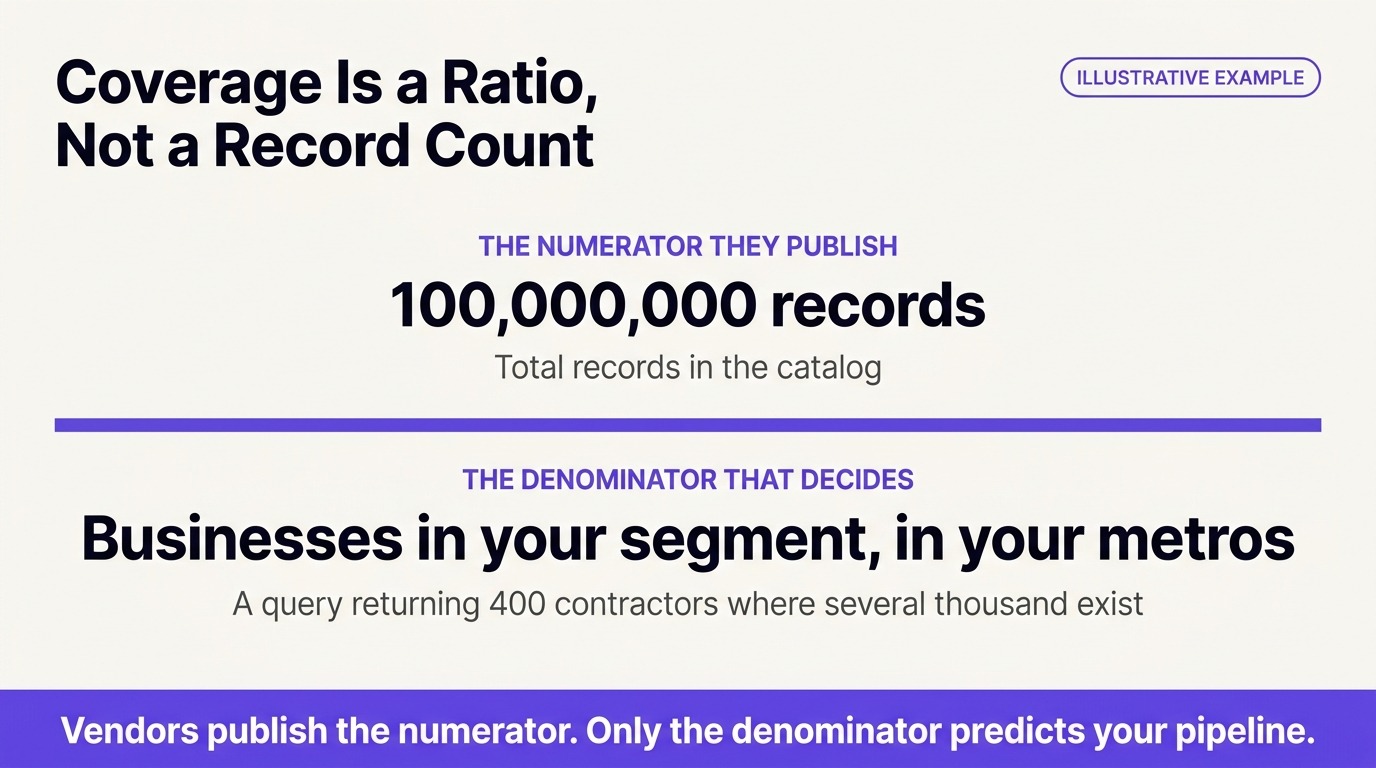
Coverage is a ratio, and vendors publish only the numerator. A file of 100 million records is worthless if your segment is HVAC contractors in secondary metros and the data skews toward funded technology companies.
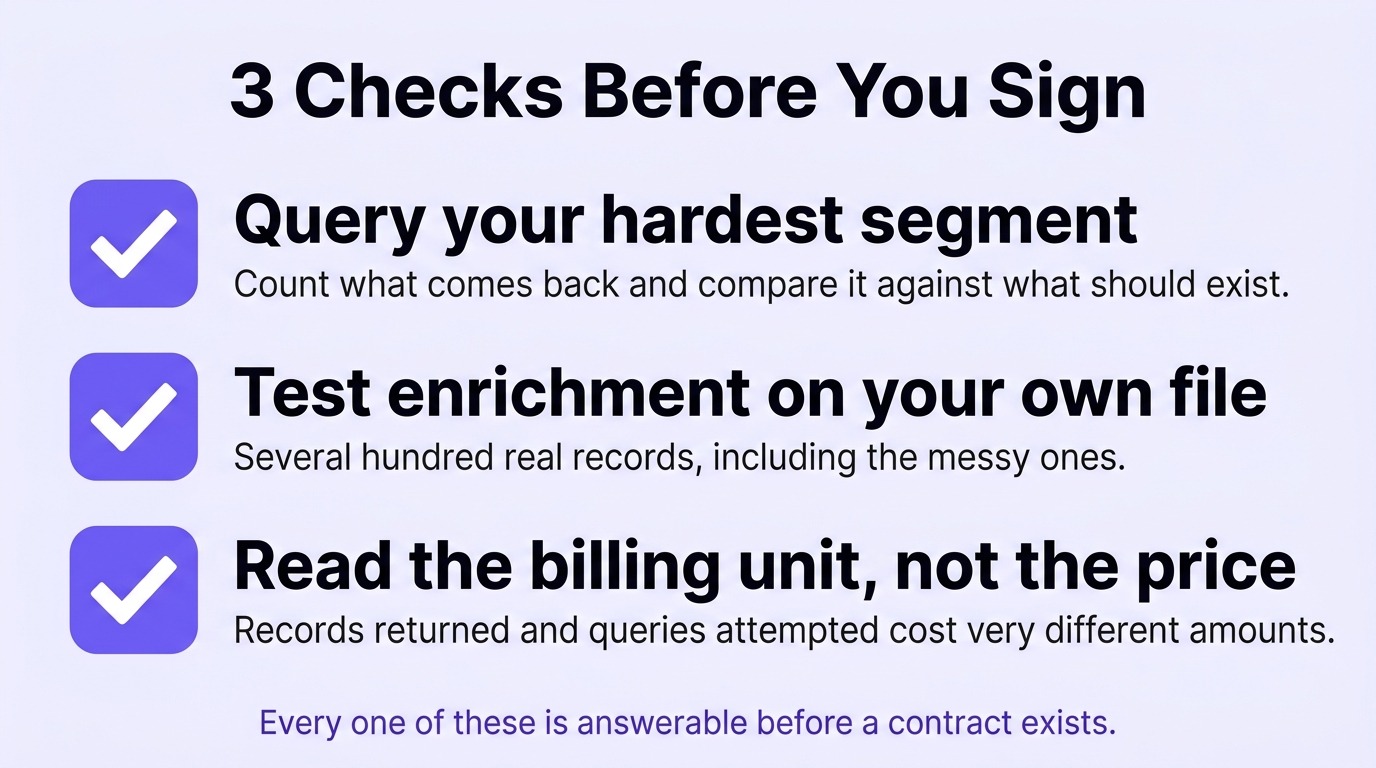
The practical test is to define your tightest realistic query, run it, and count. Take the industry category, geography, and size band you prospect into, then compare the result against an independent estimate of how many such businesses exist. A dataset returning 400 plumbing contractors in a metro that plausibly supports several thousand has told you what no demo would.
Geography deserves the same scrutiny. A sales data API sold as one national business dataset behaves differently from one assembled through regional packages, where entering a new territory means a new contract. If your territory map changes annually, that difference outweighs a few points of field completeness.
Enrichment Is a Match-Rate Problem
Enrichment fails subtly. You send 50,000 account records, get 31,000 back, and the 19,000 misses disappear into a log nobody reads. Match rate governs whether a lead enrichment API delivers value, and it's heavily segment-dependent.
Match logic matters as much as coverage. Matching on a clean domain is straightforward, but matching on a business name plus a street address, which is what you hold for most SMB records, is where providers diverge. Ask how near-matches resolve and whether a franchise location and its parent brand are distinct records.
Test with your own file rather than a sample. Pull 500 accounts you know are real, including the messy ones, and measure what comes back populated. A prospect intelligence API that hits 90% on enterprise accounts and 40% on your SMB base is two different products, depending on which team uses it.
How Fresh Does Prospecting Data Need to Be?
Freshness gets discussed as a single number when it's really two questions: how quickly a provider detects a change and how quickly you can pull that change into your systems. Vendors tend to answer the first and leave you to discover the second.
What Real Time Actually Means in Practice
"Real time" in business data almost never means instantaneous. Records are assembled from public web sources, filings, and directory listings, and those inputs change on their own schedules. A restaurant closes on a Tuesday, and the signal lands once the underlying sources reflect it, which is a rolling process rather than an event.

That's fine for most prospecting work. What matters is whether the cadence supports the decisions you make with it. Territory planning tolerates a monthly view. Sequencing against newly opened locations does not. The Census Bureau records hundreds of thousands of new business applications each month, so any static prospect file starts losing ground the day you export it.
Keeping Records Current With Scheduled Delta Queries
The supported pattern for ongoing sync is a scheduled delta query. You poll the API on a cadence you control, filtered to records changed since your last successful run using a dateUpdated filter, then write only the deltas back to your CRM.
This design is easier to operate than an event-driven one. Your job either ran or it did not, and a failed run is recoverable by widening the date window on the next attempt. Instrument it before you trust it, though: a delta query returning zero rows looks identical whether nothing changed or your filter is malformed, so log the row count on every run.
What Do Pricing Signals Tell You About a B2B Company Data API?
Price per record is the least informative number on a pricing page. When comparing one sales data API against another, three structural signals predict total cost far better:
- The unit of billing. Paying for records returned means a query matching nothing costs nothing. Paying per request means every exploratory search, every miss, and every retry draws down the same budget.
- Gated versus metered. Some providers meter volume and expose every field. Others also put field groups, bulk export, or API access itself behind higher tiers, turning a volume decision into a feature negotiation.
- How overage is handled. A hard cutoff mid-quarter and a soft overage charge create very different operational risk for a team running scheduled enrichment jobs.
Why Should You Query the Data Before You Integrate It?
Every criterion above resolves to the same practical step, and it's the one most vendor processes prevent. You can't assess coverage, match rates, or field completeness for your segment by reading a specification, which is why the best business data APIs for sales teams let you run your own query against real records first.
What a Portal Session Answers That a Demo Cannot
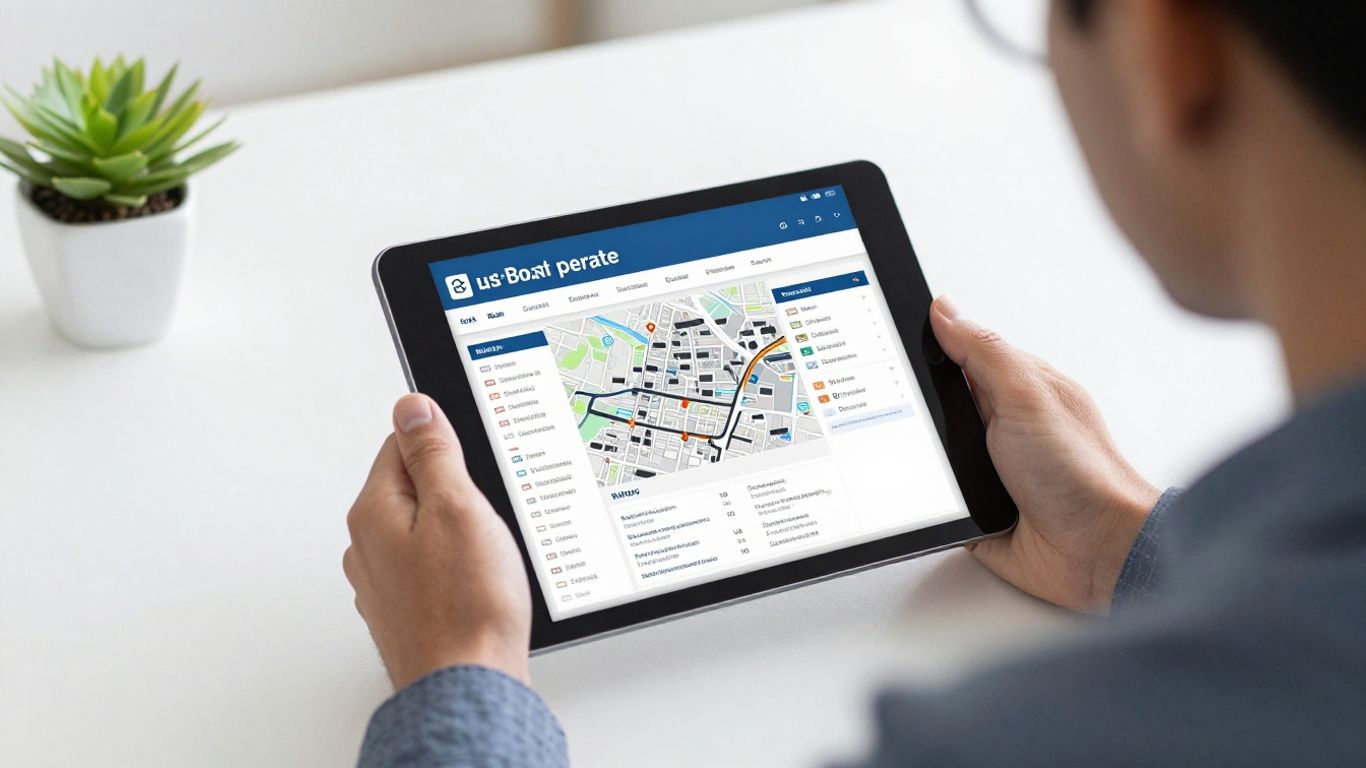
A demo shows you a curated example. A visual portal lets you search the dataset directly, filter by industry category and location, open individual business profiles, and export a sample to inspect field by field. The difference is control over the query.
That control makes the evaluation honest. When you choose the filters, you can point them at the segment you are least confident about rather than the one a sales engineer prepared. If your worry is coverage of independent auto shops in the Mountain West, you can settle it in an afternoon instead of inferring it from a coverage map.
The access model matters too. A trial constrained only by record volume answers the completeness question directly. A trial that hides fields answers nothing, and you're back to trusting the deck.

From Exploratory Query to Production API Call
Portal work also carries into implementation. Filters you build interactively map to the same parameters your integration will use, so the query you validated by eye becomes the query your job runs on a schedule. That shortens the gap between "this looks right" and "this is in production," and it lets a sales ops lead size a segment and hand engineering a validated specification before any integration exists.
Seven Questions to Ask Before You Choose a Prospect Intelligence API
Ask these questions of any business data API for sales teams on your shortlist. Each has a specific answer, and vagueness on any of them is itself informative.
- Which industry taxonomy do you use, and how are categories assigned? Algorithmically assigned classification codes behave differently from vendor-defined categories, especially for businesses spanning two sectors.
- What is the fill rate for these fields in this segment? Field presence in a schema is not field population in your slice of the data.
- How is a record counted for billing? Establish whether you pay for what a query returns or what a query costs the provider to run.
- What happens on a 200,000-record batch run? Requests-per-second caps mean your team builds throttling and retry logic before the first useful result lands.
- Can I read the full API documentation before talking to sales? Public, complete documentation lets your engineers scope the work in an hour. Docs released only after a call tell you something about the rest of the relationship.
- Is the footprint one dataset or a set of regional packages? This answer determines whether entering a new territory is a query change or a contract negotiation.
- How are schema changes communicated? A field that silently changes type breaks a nightly job in a way that is painful to diagnose.
Frequently Asked Questions
What Is the Difference Between a Business Data API and a Lead Enrichment API?
A business data API provides structured company records you can query to discover new accounts or retrieve details about known ones. A lead enrichment API is a use case for that data rather than a separate category: you submit records you already hold and receive appended attributes. The same endpoints usually serve both, which is why a prospect intelligence API is typically sold as one product.
Can a B2B Company Data API Give Me Decision-Maker Names and Direct Dials?
Not from the same dataset. Company records cover the business entity, including location, category, operating attributes, and business-level contact details. Individual names, titles, and personal contact information come from people data, which is sourced and licensed separately. Budget for two purchases because a plan assuming that one covers both will fall short at implementation.
How Many Records Should I Test Before Committing to a Vendor?
Enough to see variance, which means several hundred rather than a dozen. Test a stratified sample: your best-known accounts, your hardest segment, and a geography you are about to enter. Hand-picked lookups confirm the data works and tell you nothing about where it does not.
Should Sales Teams Buy One Sales Data API or Combine Several Sources?
It depends on how concentrated your ICP is. A team selling into one well-defined vertical can usually run on a single source. A team covering both enterprise accounts and a long SMB tail often finds no provider strong across both, and a primary source plus a narrow secondary fills the gap more cheaply than paying enterprise rates for coverage used on a fraction of records.
Choosing a Business Data API That Holds Up at Scale
Teams that regret this purchase usually skipped the same step. They evaluated on the vendor's terms, using the vendor's sample, then found the gaps in month three when a rep asked why half the accounts in a new territory came back empty.
A better sequence is cheap. Shortlist two providers, run one identical segment query against both, and compare the results side by side. That process takes an afternoon and settles arguments that would otherwise consume a quarter.
Datafiniti covers millions of U.S. businesses across industries, with a web portal for searching real records and building queries before you write integration code, plus per-record billing on the data you actually receive. Start with a working query against your own segment and judge the coverage yourself.
Read the latest articles
Read more

Business Data API: Company Data at Enterprise Scale

How to Build a Product Database With a Product Data API

Property Data API Coverage: What U.S. Datasets Include

Product Data API for Ecommerce Price Monitoring and Repricing

Real-Time Product Data API for Product-Led Growth Teams

Property Ownership Data API for Skip Tracing and Lead Gen

How APIs Make Building a Product Database Easy
Learn how to build a product database with APIs for cleaner imports, updates, search, and scalable product data.

What Is Property Transaction Data and How Does an API Help Get It?
Learn how property transaction data works and how APIs provide structured access for analysis and workflows.

How to Use Real Estate Transaction Data
Learn how to use real estate transaction data for analysis, valuation, underwriting, and market decisions.

How to Leverage Competitor Pricing Data with an API
Use competitor pricing data to build API-driven monitoring, analysis, and smarter pricing decisions.

Price Monitoring API: The Key to E-Commerce Pricing Strategy
Use a price monitoring API to track market changes, improve pricing decisions, and protect ecommerce margins.

How do Product Data APIs Work for E-Commerce Companies?
Learn how a product data API works, from collection and queries to ecommerce integration and use cases.

Bulk Real Estate Data Licensing: Access Datasets at Scale

How to Integrate MLS Listings Using an MLS Data API

GTIN Lookup API: Search Products by Barcode & UPC at Scale

Best Real Estate API 2026: Coverage, Pricing, Data Quality

Best Product Data API 2026: A State-of-the-Market Guide

Product Data API Integration Patterns for Ecommerce Platforms

Build a PropTech MVP With a Property Ownership Data API

3 Benefits of Web Scraping for Real Estate
Boost your research by using web scraping for real estate to gain market insights, automate lead lists, and minimize property risk.
How Real Estate Agents Can Leverage Proptech Data
Leverage proptech data to source leads, speed up valuations, and manage risk with accurate, real-time property insights.

What Is a UPC Lookup API?
Learn about the UPC lookup API, how it works, and its benefits for businesses. Get product data easily.

What Is a GTIN Lookup API?
Learn about the GTIN lookup API and how it can help your business grow. Get product data insights.

How Does a Property Data API Work?
Learn how a property data API works, its features, and how you can use it for real estate and business insights.

What The Best Real Estate APIs Should Have
Discover what makes the best real estate APIs stand out. Learn about essential features for your property data needs.
The Benefits of a Real Estate MLS API
Learn about the benefits of a real estate MLS API for streamlining data access and driving business growth.

Why Every Real Estate Pro Needs an MLS Database API
Learn why a MLS database API is vital for real estate pros. Get data, insights, and competitive edge.
How to Access MLS Listing Data
Learn how to access MLS listing data using an MLS data API. Discover Datafiniti's solutions and integration tips.
.png)
How to Enrich Your Product Catalog With a Real-Time API
.jpeg)
Product Data API Buyer's Guide for Ecommerce Teams

Do I Need a Real Estate Listing API?
Explore the benefits and technicalities of a real estate listing API. Learn how to choose the right provider and integrate data for business growth.

Unlocking the MLS Database with APIs
Unlock the MLS database with APIs. Learn how to access property data, gain real estate insights, and integrate MLS data for your business needs.

Why Real Estate Tech Startups Need Property APIs with Ownership Details
Discover how property APIs with ownership details empower real estate tech startups. Learn about data integration, risk mitigation, and driving business value.
The Value of a Product Catalog Sync for Product Managers
Unlock the value of product catalog sync for product managers. Streamline data, improve decisions, and reduce costs with real-time insights.

What is a Product Data Webhook?
Learn about product data webhooks, their components, and how they enable real-time updates for business intelligence and workflow automation.

Why Is a Product Data API Integration Essential for Analysts & Product Managers?
Unlock insights with product data API integration. Essential for analysts & product managers to streamline data access & enhance product strategy.

What Is a Product Data API and Its Benefits
Learn about product data APIs, their benefits, and how they drive business growth. Explore integration and advanced use cases.

What Do eCommerce Data Vendors Do?
Learn what ecommerce data vendors do, their services, and how to choose the right one for your business growth.

How to Compare Product Data Providers: What to Look For
Compare product data providers. Learn what to look for in data quality, structure, and integration features.

How to Get Your Product Data in Real-Time Using APIs
Learn how to leverage real-time product data APIs for e-commerce, competitive analysis, and AI. Get instant access to clean, structured product data.

Best Product Data API: Features to Look for
Find the best product data API with real-time updates, comprehensive coverage, and a user-friendly portal. Explore features to look for.

Unlocking Property Data with an API
Access property data with a powerful property database API. Explore listings, market analysis, investment opportunities, and more. Get started today!

Unlocking CRE with APIs
Unlock commercial real estate insights with a powerful API. Access property data, streamline workflows, and enhance investment strategies.

How to Get a Real-Time Product Feed Using an API
Learn how to get a real-time product feed using an API. Access, leverage, and ensure accuracy of product data for your business needs.

Spying on Competitor Prices: What You Need to Know
Learn how to gather and analyze competitor pricing data to inform your business strategy. Understand key components and ethical considerations.

Product Data Enrichment: What Are You Missing?
Enhance your product data with comprehensive enrichment. Discover insights, drive growth, and choose the right approach for your business.
.png)
IDX vs MLS API: A Developer's Guide to Real Estate Listing Data
.png)
Real Estate API Pricing Models Explained: Subscription vs. Usage-Based

Real Estate API vs Web Scraping: Which Wins in 2026?
.png)
Product Data APIs Explained: Powering Product Search and Catalog Automation

Best Sources for Bulk Real Estate Transaction Data

How to Get the Most out of a Product Catalog API
Learn how to leverage a product catalog API for business growth. Discover data quality, access methods, and strategy for your product catalog API.

Taming Your Ecommerce Product Data Feed
Optimize your ecommerce product data feed for growth. Learn strategies, leverage technology, and ensure data quality for better customer experience and AI initiatives.

Streamlining Your Product Search with an API
Explore the benefits and integration of a product search API. Streamline your product discovery and leverage data for business growth.
.png)
Real Estate Transaction Databases: What You Need to Know
.png)
Best MLS API for Real Estate Software: What Developers Need

How Real Estate Platforms Access MLS Database APIs
.png)
Commercial Real Estate API vs. Residential Property API
.png)
How to Choose a Real Estate Database API for Your MVP
MLS API vs. IDX: What's the Diff?
MLS API vs IDX: Explore the differences in real estate data access, retrieval, and integration. Understand which solution fits your needs.

Scraping vs. APIs: Getting Real Estate Data
Compare web scraping vs real estate API for data acquisition. Learn the pros, cons, and best use cases for each method.

Cracking the Code: Housing Sales Insights
Unlock housing sales analytics insights with Datafiniti. Explore property data, market trends, and advanced techniques for strategic decisions.

Property Valuation API: Your Go-To Real Estate Tool
Leverage the property valuation API for real estate insights. Access comprehensive property data for diverse applications with Datafiniti.

Product Data APIs Explained
Learn about product data APIs explained. Discover how to access, integrate, and utilize product data for e-commerce, analytics, and more.

Unlocking Your Ecommerce Data with APIs
Unlock ecommerce data with APIs for business insights, product catalog enrichment, and competitive analysis. Explore data via portal or API.

Your Guide to Housing Sales APIs
Explore housing sales API data for insights. Access property data, integrate into applications, and gain business intelligence. Get started today!

Real Estate Ownership Data: How to Access, Analyze and Use at Scale
Access, analyze, and use real estate ownership data at scale. Learn how to find, process, and leverage this crucial information for business insights.

Unlocking Opportunities: Navigating Bulk Real Estate Transaction Data
Unlock opportunities with bulk real estate transaction data. Learn how to access, analyze, and leverage property data for investing, marketing, and more.
What Is a Property Sales Database?
Explore what a property sales database is, its core components, how to access data, and key use cases for real estate analysis and more.

Benefits of Obtaining Housing Transaction Data
Unlock insights with housing transaction data. Analyze markets, investments, sales, and risk. Get comprehensive property data for informed decisions.

Understanding Real Estate Transaction Databases
IDX vs MLS API: What Every Real Estate Professional Should Know
Understand IDX vs MLS API differences. Learn about data access, integration, and how Datafiniti's solutions empower real estate professionals.

What Is an MLS Database API?
Explore the MLS database API: understand its components, benefits, and how to access real estate data for various applications. Learn about its core functionality and technical aspects.

How a Property Database API Can Help Real Estate Pros
Learn how a property database API can help real estate pros analyze trends, monitor listings, and optimize strategies. Get data insights.

What Is a Residential Property API?
Explore what a residential property API is, its features, benefits, and real-world applications for real estate professionals and investors.

What Is a Commercial Real Estate API?
Explore commercial real estate API functionality, data integration, and use cases. Learn how to leverage property, business, and people data for insights.

Understanding MVP Data Integration
Learn about MVP data integration, its components, benefits, and strategies for accessing and utilizing data resources effectively.

How to Choose the Best Property Data API
Learn how to choose the best property data API. Explore features, providers, pricing, and integration for real estate insights.

Real Estate Database API: What to Look for
Explore real estate database API options. Learn about data quality, features, and how to choose the right provider for your needs.
.png)
Real Estate Transaction Database: An API Access Guide

How Do Product Data APIs Work?
Understand how a product data API works, its key features, integration methods, and applications for e-commerce and business intelligence.

How Do Data Aggregation Platforms Work?
Explore how data aggregation platforms work, their capabilities, and applications. Learn to choose and implement the right platform for your business intelligence needs.

Why Do Companies Need Property Data Aggregation?
Discover why property data aggregation is crucial for businesses. Streamline access, empower functions, enhance risk management, and drive strategic decisions with authoritative insights.

MLS API: The Complete Guide to Accessing MLS Listing Data

Product Search API vs. Product Data API: What's the Difference?

What Are the Best MLS Data API Features to Look For?
Discover the best MLS data API features, including real-time updates, bulk downloads, and flexible filtering for property data.

What Is a Product Data API?
Explore the functionality and benefits of a product data API. Learn how to integrate, leverage, and choose the right provider for your business insights.
What Is the Difference Between Product Search API and Product Data API?
Understand the difference between Product Search API and Product Data API. Learn how to leverage product data for business intelligence and analytics.

Guide to Accessing Real Estate Transaction Database Via API
Access real estate transaction data via API. Explore property insights, sales, underwriting, and advanced applications with our authoritative guide.

Is a Real Estate MLS API Beneficial?
Explore the benefits of a real estate MLS API for enhanced data access, streamlined workflows, and market responsiveness. Learn about key features and use cases.

What is an MLS Database API?
Explore the MLS database API for comprehensive property data access. Learn about its core functionality, key features, and integration into real estate technology.

What Is a Property Data API?
Explore the capabilities of a property data API. Understand its core functionality, key features for developers, and how to access property information at scale for business insights.
.png)
Real Estate API Pricing: What You Need to Know Before You Build
.jpeg)
How to Choose a Property Market API for Investment Platforms
Choosing the right property market API is critical for investment platforms. Learn how to evaluate data depth, coverage, freshness, and integration quality before you commit.
Data you can trust, delivered in a format your systems can use, at the scale your product requires.