

Build a PropTech MVP With a Property Ownership Data API
Key Takeaways
A property ownership data API gives early-stage PropTech teams ready-to-use ownership and transaction records, so they can validate a product instead of building data infrastructure.
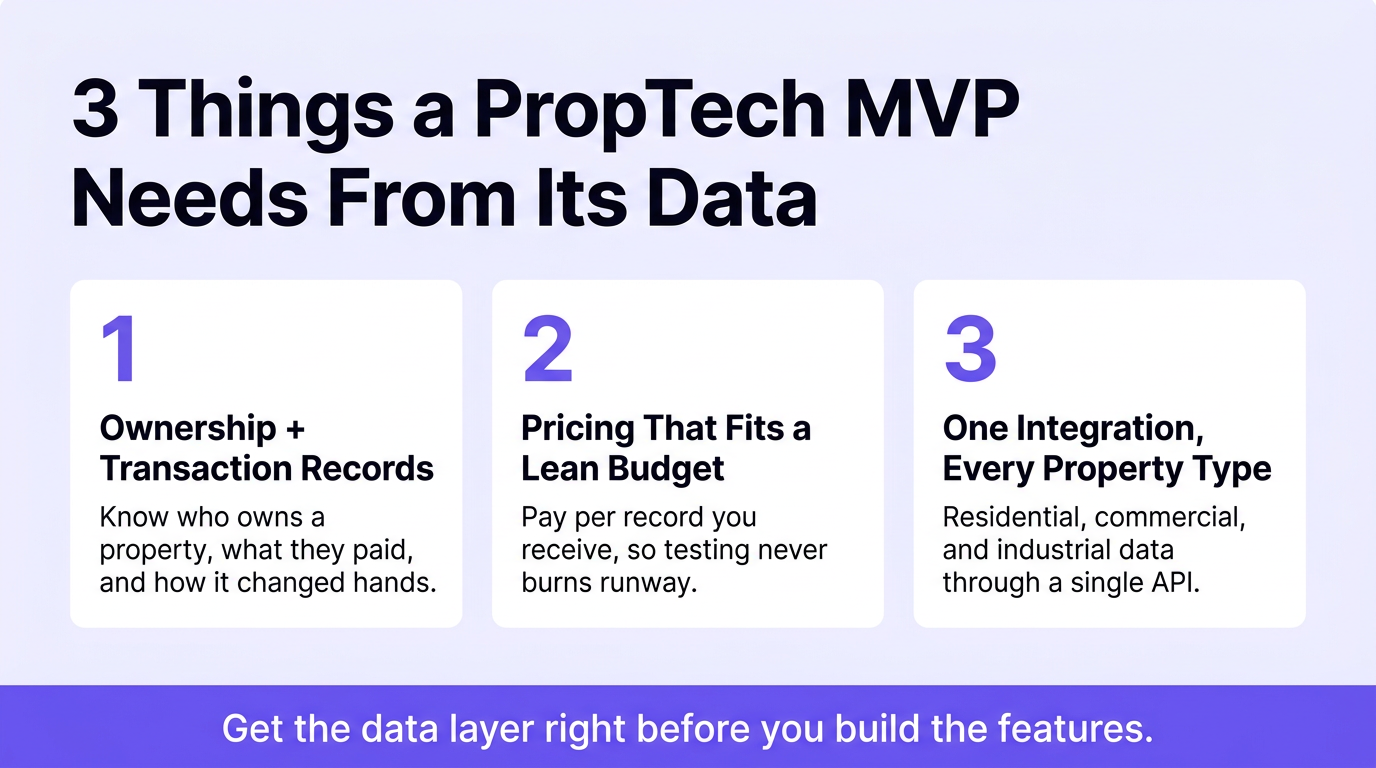
- Ownership and transaction data together answer who owns a property, what they paid, and how the asset has changed hands over time.
- Buying structured data through an API removes the months of scraping, cleaning, and pipeline work a small team cannot spare.
- Per-record pricing keeps early costs tied to real usage, so a prototype does not burn budget on data it never returns.
- One integration covering residential, commercial, and industrial records nationwide future-proofs the product as it grows.
Choose the data layer first, because it shapes what your MVP can do long before you write a line of feature code.
A property ownership data API is a service that returns structured records about who owns a property, along with the sale history, mortgage activity, and deed transfers tied to that address. For an early-stage PropTech team, the appeal is simple: you can pull clean, structured property records on demand instead of spending a quarter assembling public records by hand. That speed matters, because the global PropTech market is projected to grow from roughly $47 billion in 2025 to more than $209 billion by 2035. The startups that capture that growth tend to be the ones shipping a working product first.
The challenge for most founders is not deciding whether they need property data. It is deciding how to get it without hiring a data engineering team they cannot yet afford. This guide covers what the API delivers, how ownership and transaction records work together, what pricing to expect on a startup budget, and how to evaluate a provider before you build on it.
What Is a Property Ownership Data API?
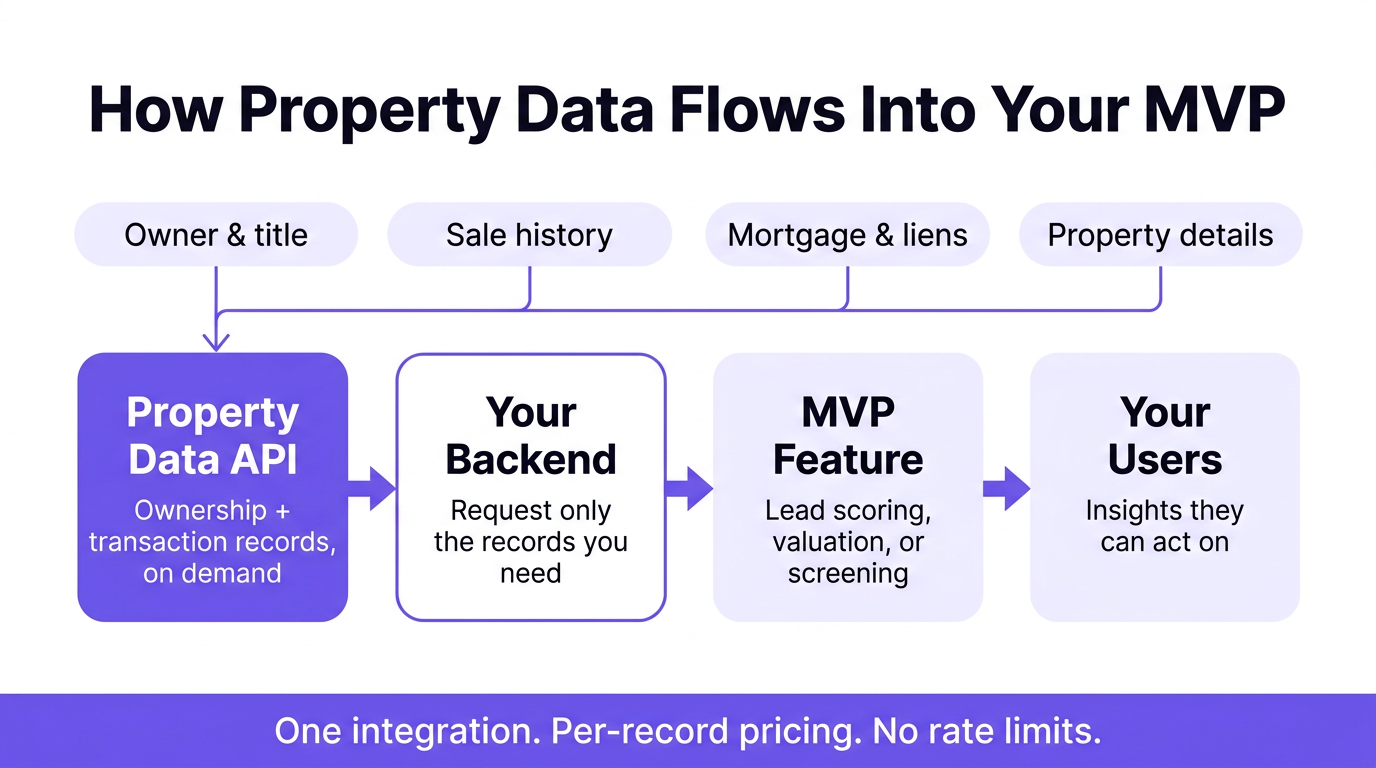
This kind of API delivers ownership and property records as structured data your application can query in real time. Instead of downloading county files or scraping listing sites, your code sends a request describing the records you want, and the service returns clean, normalized results.
The value for a PropTech MVP is that the data arrives ready to use, with consistent fields across every market you serve. That consistency is what lets a small team build a feature once rather than patching edge cases for each new region.
What's Inside an Ownership Record
An ownership record ties a physical address to the people or entities that hold title to it. At minimum that includes the current owner's name, the mailing address, and whether the owner occupies the property or holds it as an investment.
Richer records add prior owners, the entity type behind an LLC, and the length of ownership. For a lead-generation or owner-outreach tool, this is the core of the product.
Where Real Estate Transaction Data Fits
Ownership tells you who holds a property today. A real estate transaction API tells you the story behind it: the sale price, the closing date, the mortgage amount, and every transfer in the chain of title.
Together, the two datasets answer questions a single listing feed never could, like how much equity an owner likely holds or how often a property changes hands. Many teams pair ownership data with bulk real estate transaction data so their first model has both the current state and the history behind it.
Why Real Estate Data for Startups Comes From an API, Not a Pipeline
Building a data pipeline is its own product. Sourcing records from many counties, normalizing mismatched fields, and keeping everything current is months of work that produces nothing a user can see. That is why the industry has moved toward integration over construction: in Postman's 2025 survey, 82 percent of organizations reported adopting an API-first approach. For a lean team, real estate data for startups is most useful when it arrives as a finished service rather than a build-it-yourself project.
The Hidden Cost of Building Your Own Data Layer
The salary of a data engineer is only the start. Public records come in many incompatible formats, change without notice, and need constant monitoring. Every hour your team spends reconciling county data is an hour not spent on the feature that wins customers.
Building an in-house property data layer usually means committing to:
- Ongoing collection from many county and public sources, each with its own format and update schedule.
- Normalization logic that maps inconsistent fields into a single schema your app can trust.
- Monitoring and cleanup so broken or stale records never surface to your users.
For most early-stage products, that is a tradeoff worth avoiding. The data layer should be solved on day one, not rebuilt over six months.
Shipping a Prototype Faster
When the data layer is already handled, a small team can move from idea to working prototype in weeks. The right PropTech MVP data lets you validate the core hypothesis, who your users are and what they will pay for, before you invest in scale.
That is also why so many real estate tech startups lean on property APIs with ownership details from day one rather than building toward them later.
How Does Property Ownership Data API Pricing Work on a Startup Budget?
Pricing is where many founders get burned, because the model matters as much as the sticker price. The two common approaches are per-request billing and per-record credit pricing, and the difference shows up fast on a lean budget.
Per-Record Credit Pricing Explained
With per-record pricing, you pay for the data you actually receive. Send a query, and credits are spent only on the records returned to you. A search that matches nothing costs nothing.
For an MVP that is still figuring out which queries matter, this keeps spend tied directly to value and makes early costs easy to predict. You can experiment freely without watching a meter run on every test.
Why Per-Request Billing Drains a Lean Budget
Per-request models charge for every call, whether or not it returns useful data. During early development, when you are testing filters and refining queries, a large share of those calls return little or nothing, and you pay for all of them.
Request caps make it worse, forcing you to build retry and throttling logic before you even have a product. A startup should not spend its first month engineering around someone else's billing model.

What Can You Build With Ownership and Transaction Data?
A single integration can power a surprising range of products. Because the records arrive normalized through one API, you are not stitching together a separate feed for each property type or region.
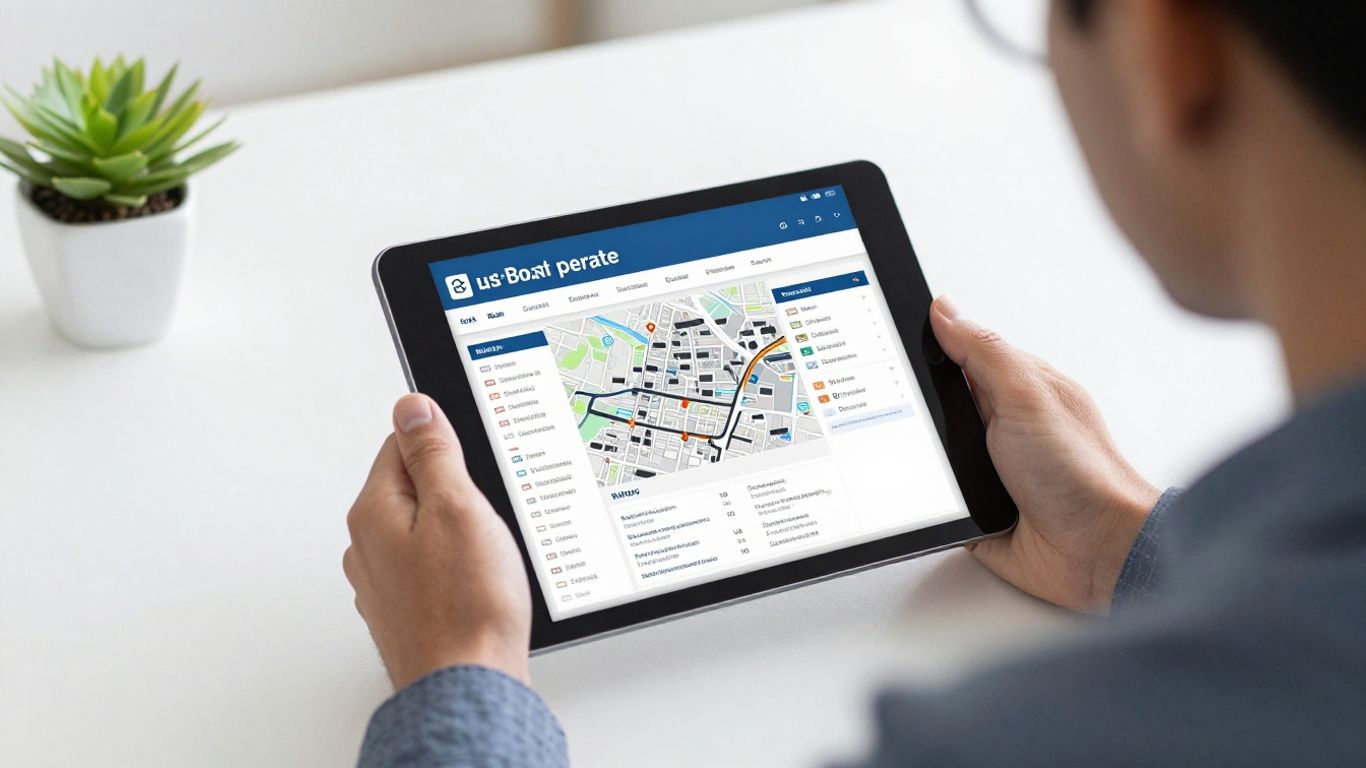
Strong providers cover residential, commercial, and industrial records nationwide, so your product can expand into new markets without new contracts, and predictable throughput means you are not rate-limited the moment usage grows. A visual portal to explore the data before you write integration code shortens the path from signup to first query. Here are five MVPs teams commonly build by pairing a real estate transaction API with ownership records:
- Lead generation and outreach tools. Filter owners by equity, tenure, or absentee status to surface high-intent prospects for agents, lenders, or investors.
- Automated valuation models. Combine ownership, sale history, and property characteristics to estimate value and confidence at scale.
- Investment screening dashboards. Score properties and neighborhoods using transaction velocity, price trends, and ownership concentration.
- Owner verification and skip tracing. Match an address to its current owner to confirm who you are dealing with before a deal moves forward.
- Portfolio risk monitoring. Track ownership changes, new liens, and sales across a watchlist so users hear about events that affect their holdings.
Each of these starts with the same foundation, which is why getting the data right early pays off across whatever you build next.
How to Choose a Property Ownership Data API for Your MVP
Not every provider fits a startup. Before you commit, weigh the factors that determine whether the data will hold up as your product grows and whether the cost will stay sane. A provider's property ownership data offering should be judged on more than coverage alone.
Key things to evaluate before you integrate:
- Coverage and property types. Confirm the provider serves the regions and the residential, commercial, or industrial records your product needs.
- Pricing model. Favor per-record pricing so early experimentation does not run up a bill for data you never use.
- Documentation you can read without a sales call. Clear, public docs let you understand the query structure and ship faster, while sparse docs that require a sales conversation slow you down.
- Data freshness. Ask how often ownership and transaction records update, since stale data quietly erodes user trust.
Match the provider to your full roadmap, not the launch alone. The PropTech MVP data that works for a single-market prototype should also scale to the markets you plan to enter next.

Frequently Asked Questions
A few questions come up again and again from founders weighing property data options for an early build. Here are direct answers to the ones that matter most.
What Does a Property Ownership Data API Actually Return?
It returns structured records about a property's owner and history, including the current owner, sale prices, deed transfers, and mortgage activity, delivered as JSON your application can parse. The exact fields depend on the provider, but the goal is the same: usable data without manual collection.
How Is Ownership Data Different From a Real Estate Transaction API?
Ownership data tells you who holds a property now. A real estate transaction API focuses on the events: sales, closings, and transfers over time. Most products use both together so they have the current state and the history behind it.
Is a Property Ownership Data API Affordable for a Bootstrapped Startup?
It can be, especially with per-record pricing that charges only for data you receive. That model keeps early costs low while you test which queries matter, then scales with you as usage grows.
How Much Property Data Do I Need to Launch an MVP?
Less than you think. Start with the one workflow that proves your core idea, validate it with real users, then expand coverage. The PropTech MVP data you need is the smallest set that lets you test the hypothesis.
Can One API Cover Different Property Types and Regions?
Yes. The same integration can return residential, commercial, and industrial records, and a strong provider keeps the field structure consistent across all of them. That lets you write your parsing logic once instead of maintaining a separate code path for each property type.
Build the Product, Not the Plumbing
The data layer is the first real decision a PropTech team makes, and it shapes everything downstream. Ownership and transaction records, delivered through a clean API with pricing that respects a startup budget, let you spend your runway on the product instead of the plumbing.
Affordable, well-structured real estate data for startups now arrives as a service, so getting the foundation right is easier than it has ever been. Get it right, and the features that win users become far simpler to build.
Datafiniti gives PropTech teams ownership and transaction records across residential, commercial, and industrial properties nationwide, with per-record pricing and no rate limits, all through one integration. Request a demo to see how quickly your MVP can start querying real property data.
Read the latest articles

Read more

Build vs Buy: Business Data Enrichment for Growing Teams

Company Data API Pricing: Bulk & Enterprise-Scale Access

Best Business Data APIs for Sales Teams & Prospecting

Business Data API: Company Data at Enterprise Scale

How to Build a Product Database With a Product Data API

Property Data API Coverage: What U.S. Datasets Include

Product Data API for Ecommerce Price Monitoring and Repricing

Real-Time Product Data API for Product-Led Growth Teams

Property Ownership Data API for Skip Tracing and Lead Gen

How APIs Make Building a Product Database Easy
Learn how to build a product database with APIs for cleaner imports, updates, search, and scalable product data.

How to Leverage Competitor Pricing Data with an API
Use competitor pricing data to build API-driven monitoring, analysis, and smarter pricing decisions.

Price Monitoring API: The Key to E-Commerce Pricing Strategy
Use a price monitoring API to track market changes, improve pricing decisions, and protect ecommerce margins.

How do Product Data APIs Work for E-Commerce Companies?
Learn how a product data API works, from collection and queries to ecommerce integration and use cases.

GTIN Lookup API: Search Products by Barcode & UPC at Scale

Best Real Estate API 2026: Coverage, Pricing, Data Quality

Best Product Data API 2026: A State-of-the-Market Guide

Product Data API Integration Patterns for Ecommerce Platforms
Build a PropTech MVP With a Property Ownership Data API

3 Benefits of Web Scraping for Real Estate
Boost your research by using web scraping for real estate to gain market insights, automate lead lists, and minimize property risk.
How Real Estate Agents Can Leverage Proptech Data
Leverage proptech data to source leads, speed up valuations, and manage risk with accurate, real-time property insights.

What Is a UPC Lookup API?
Learn about the UPC lookup API, how it works, and its benefits for businesses. Get product data easily.

What Is a GTIN Lookup API?
Learn about the GTIN lookup API and how it can help your business grow. Get product data insights.

How Does a Property Data API Work?
Learn how a property data API works, its features, and how you can use it for real estate and business insights.

What The Best Real Estate APIs Should Have
Discover what makes the best real estate APIs stand out. Learn about essential features for your property data needs.

MLS Listings API: How to Access MLS Listing Data
.png)
How to Enrich Your Product Catalog With a Real-Time API
.jpeg)
Product Data API Buyer's Guide for Ecommerce Teams

Do I Need a Real Estate Listing API?
Explore the benefits and technicalities of a real estate listing API. Learn how to choose the right provider and integrate data for business growth.

Why Real Estate Tech Startups Need Property APIs with Ownership Details
Discover how property APIs with ownership details empower real estate tech startups. Learn about data integration, risk mitigation, and driving business value.
The Value of a Product Catalog Sync for Product Managers
Unlock the value of product catalog sync for product managers. Streamline data, improve decisions, and reduce costs with real-time insights.

What is a Product Data Webhook?
Learn about product data webhooks, their components, and how they enable real-time updates for business intelligence and workflow automation.

Why Is a Product Data API Integration Essential for Analysts & Product Managers?
Unlock insights with product data API integration. Essential for analysts & product managers to streamline data access & enhance product strategy.

What Is a Product Data API and Its Benefits
Learn about product data APIs, their benefits, and how they drive business growth. Explore integration and advanced use cases.

What Do eCommerce Data Vendors Do?
Learn what ecommerce data vendors do, their services, and how to choose the right one for your business growth.

How to Compare Product Data Providers: What to Look For
Compare product data providers. Learn what to look for in data quality, structure, and integration features.

How to Get Your Product Data in Real-Time Using APIs
Learn how to leverage real-time product data APIs for e-commerce, competitive analysis, and AI. Get instant access to clean, structured product data.

Best Product Data API: Features to Look for
Find the best product data API with real-time updates, comprehensive coverage, and a user-friendly portal. Explore features to look for.

Unlocking Property Data with an API
Access property data with a powerful property database API. Explore listings, market analysis, investment opportunities, and more. Get started today!

Unlocking CRE with APIs
Unlock commercial real estate insights with a powerful API. Access property data, streamline workflows, and enhance investment strategies.

How to Get a Real-Time Product Feed Using an API
Learn how to get a real-time product feed using an API. Access, leverage, and ensure accuracy of product data for your business needs.

Spying on Competitor Prices: What You Need to Know
Learn how to gather and analyze competitor pricing data to inform your business strategy. Understand key components and ethical considerations.

Product Data Enrichment: What Are You Missing?
Enhance your product data with comprehensive enrichment. Discover insights, drive growth, and choose the right approach for your business.
.png)
IDX vs MLS API: A Developer's Guide to Real Estate Listing Data
.png)
Real Estate API Pricing Models Explained: Subscription vs. Usage-Based

Real Estate API vs Web Scraping: The Buy-vs-Build Decision
.png)
Product Data APIs Explained: Powering Product Search and Catalog Automation

How to Get the Most out of a Product Catalog API
Learn how to leverage a product catalog API for business growth. Discover data quality, access methods, and strategy for your product catalog API.

Taming Your Ecommerce Product Data Feed
Optimize your ecommerce product data feed for growth. Learn strategies, leverage technology, and ensure data quality for better customer experience and AI initiatives.

Streamlining Your Product Search with an API
Explore the benefits and integration of a product search API. Streamline your product discovery and leverage data for business growth.
.png)
What Is a Real Estate Transaction Database? A Complete Guide

How Real Estate Platforms Access MLS Database APIs
.png)
Commercial Real Estate API vs. Residential Property API
.png)
How to Choose a Real Estate Database API for Your MVP
MLS API vs. IDX: What's the Diff?
MLS API vs IDX: Explore the differences in real estate data access, retrieval, and integration. Understand which solution fits your needs.

Scraping vs. APIs: Getting Real Estate Data
Compare web scraping vs real estate API for data acquisition. Learn the pros, cons, and best use cases for each method.

Property Valuation API: Your Go-To Real Estate Tool
Leverage the property valuation API for real estate insights. Access comprehensive property data for diverse applications with Datafiniti.

Product Data APIs Explained
Learn about product data APIs explained. Discover how to access, integrate, and utilize product data for e-commerce, analytics, and more.

Unlocking Your Ecommerce Data with APIs
Unlock ecommerce data with APIs for business insights, product catalog enrichment, and competitive analysis. Explore data via portal or API.

Real Estate Ownership Data: How to Access, Analyze and Use at Scale
Access, analyze, and use real estate ownership data at scale. Learn how to find, process, and leverage this crucial information for business insights.

IDX vs MLS API: What Every Real Estate Professional Should Know

How a Property Database API Can Help Real Estate Pros
Learn how a property database API can help real estate pros analyze trends, monitor listings, and optimize strategies. Get data insights.

What Is a Residential Property API?
Explore what a residential property API is, its features, benefits, and real-world applications for real estate professionals and investors.

What Is a Commercial Real Estate API?
Explore commercial real estate API functionality, data integration, and use cases. Learn how to leverage property, business, and people data for insights.

Understanding MVP Data Integration
Learn about MVP data integration, its components, benefits, and strategies for accessing and utilizing data resources effectively.

How to Choose the Best Property Data API
Learn how to choose the best property data API. Explore features, providers, pricing, and integration for real estate insights.

Real Estate Database API: What to Look for
Explore real estate database API options. Learn about data quality, features, and how to choose the right provider for your needs.

How Do Product Data APIs Work?
Understand how a product data API works, its key features, integration methods, and applications for e-commerce and business intelligence.

How Do Data Aggregation Platforms Work?
Explore how data aggregation platforms work, their capabilities, and applications. Learn to choose and implement the right platform for your business intelligence needs.

Why Do Companies Need Property Data Aggregation?
Discover why property data aggregation is crucial for businesses. Streamline access, empower functions, enhance risk management, and drive strategic decisions with authoritative insights.

MLS Database API: How to Choose a Provider and Get Access

Product Search API vs. Product Data API: What's the Difference?

What Is a Product Data API?
Explore the functionality and benefits of a product data API. Learn how to integrate, leverage, and choose the right provider for your business insights.
What Is the Difference Between Product Search API and Product Data API?
Understand the difference between Product Search API and Product Data API. Learn how to leverage product data for business intelligence and analytics.

What Is a Property Data API?
Explore the capabilities of a property data API. Understand its core functionality, key features for developers, and how to access property information at scale for business insights.
.png)
Real Estate API Pricing: What You Need to Know Before You Build
.jpeg)
How to Choose a Property Market API for Investment Platforms
Choosing the right property market API is critical for investment platforms. Learn how to evaluate data depth, coverage, freshness, and integration quality before you commit.
Data you can trust, delivered in a format your systems can use, at the scale your product requires.